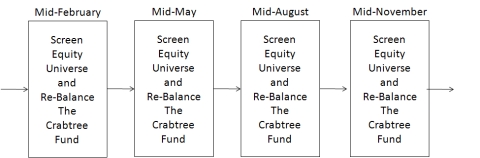
The parallel process is better than a serial one because of several reasons.
First, by using a strictly data-based approach, it eliminates emotion in the stock selection process. There’s no doubt that emotions play a variety of roles in the stock market, but our experience is that its overall effects tend to be negative. Investors are human (as are the people who write quantitative software!) and there are well known emotion-driven effects, such as “anchoring,” “selling the winners,” “doubling down” and over-owning your employer’s stock that conspire to drain away alpha.
A second advantage of parallel processing is that the information on which the stock selection decision is based is perpetually fresh. In fact, our choice of re-balancing dates (e.g. 45 or more days into each calendar quarter) was chosen (and tested) because the SEC mandates that quarterly filings such as Form 10-Qs must be submitted before that date. The vast majority of companies (84%) use a fiscal year that ends in March, June, September and December. Which means that our quantitative screen is choosing its portfolio with the freshest financial data possible.